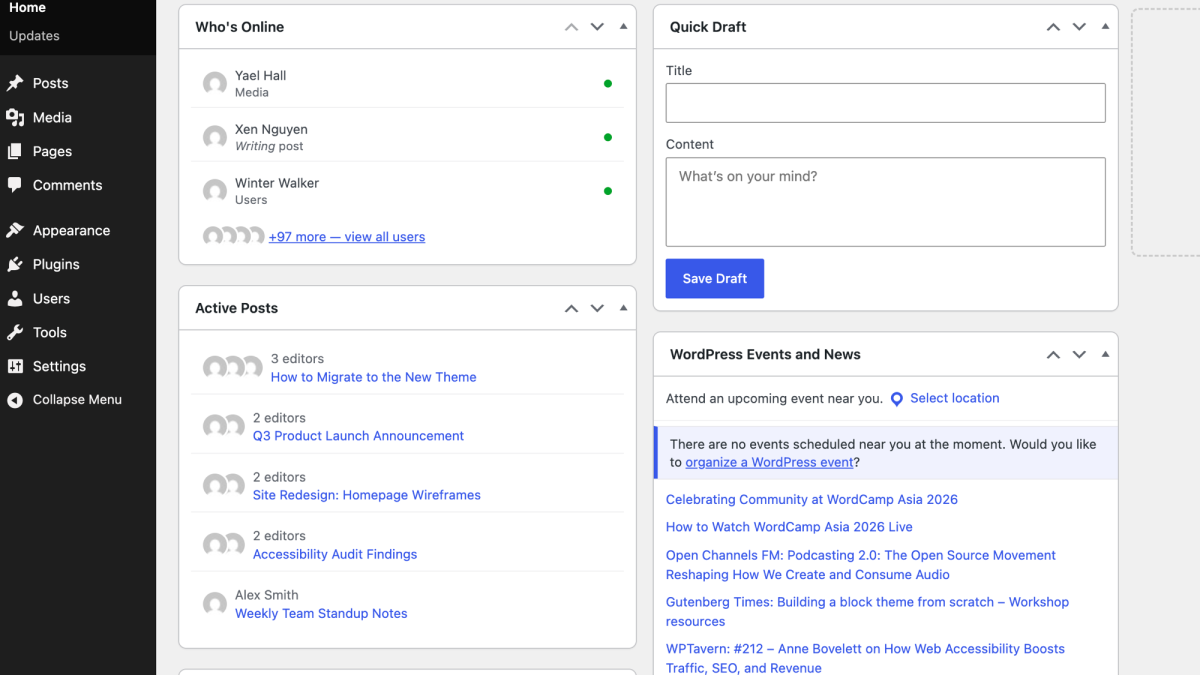
WordPress has unveiled the Presence API, an experimental feature plugin designed to provide a comprehensive system-wide awareness layer within the admin dashboard. This new addition aims to reveal who is logged in, which admin screens they are viewing, and what posts they are actively editing, marking a significant step towards improved real-time collaboration for WordPress site operators and developers.
Key Takeaways
- The Presence API plugin offers live visibility of logged-in users, their admin screen activity, and post editing status.
- New UI elements include dashboard widgets, an admin bar online indicator, a post list editors column, and an online filter for users.
- The plugin uses dedicated ephemeral data storage and integrates with the Heartbeat API to avoid site-wide cache invalidation.
- The feature is gated by edit_posts capability and is currently experimental, seeking community feedback for refinement.
- It addresses longstanding gaps in WordPress’s handling of concurrent admin user presence and editing conflicts.
The Presence API: What It Does and Why It Matters
Currently, WordPress lacks a native mechanism to show which users are simultaneously logged into the admin area. While it prevents overlapping edits via post locking, this only triggers when a collision occurs, often after conflicting work has begun. The Presence API plugin changes this by proactively showing live presence signals: who is online, what admin panels they are using, and which posts they are editing, all in real time.
This dynamic view is presented through multiple UI components. Dashboard widgets named “Who’s Online” and “Active Posts” provide at-a-glance status. The admin bar features an avatar stack indicating online users right above the screen. The post list screen now includes an “Editors” column to display which posts have active editors before opening them. Additionally, the user list gains an “Online” filter to quickly identify currently logged-in users.
These features are permission-controlled and only visible to users with the edit_posts capability, preserving security and minimizing noise for less privileged roles. The plugin also exposes REST API endpoints and WP-CLI commands, enabling developers and site operators to integrate presence data in custom workflows or automation.
Technical Approach and Performance Considerations
During the WordPress 7.0 development cycle, an important discussion (#64696) identified that storing high-frequency ephemeral presence data in shared database tables caused persistent cache invalidation that affected site-wide performance. To address this, the Presence API plugin uses a dedicated ephemeral data table with a 60-second time-to-live (TTL) for each record.
The plugin leverages the existing Heartbeat API for data flow, ensuring efficient communication between the client and server without overloading the system. This isolation of ephemeral data reduces performance risks associated with high-frequency updates, a critical factor for scaling presence features on busy WordPress sites.
Moreover, the plugin maintains compatibility with the existing post-lock mechanism (_edit_lock), bridging new presence functionality with established editing safeguards to prevent conflicts.
Testing and Demonstrations
WordPress Playground offers live demonstrations of the Presence API plugin in action. The 5-user blueprint simulates five editor accounts with live presence distributed across admin screens and posts, showing immediate updates in widgets and admin bar indicators without needing multiple browsers or incognito windows.
For more intensive scenarios, a 40-user blueprint is available to test how the UI handles higher user densities. This helps ensure the interface scales gracefully and remains usable even on sites with many simultaneous editors.
Community Involvement and Feedback
The Presence API plugin is currently experimental and has been submitted to the WordPress.org plugin directory as of April 6, 2026. It is actively seeking community feedback, particularly on the usefulness of its UI elements and potential additional admin screens or workflows where presence indicators would add value.
The development discussion is ongoing in the Make WordPress Core post and the #feature-presence-api channel on WordPress Slack. Bug reports and feature requests are managed through the plugin’s GitHub repository.
This initiative benefits from contributions by several core developers and community members, reflecting a collaborative effort to enhance WordPress’s collaborative editing and site management capabilities.
What This Means for WordPress Users
The Presence API plugin represents a meaningful advancement for WordPress site administrators, agencies, and developers who manage content collaboratively. By providing real-time visibility into who is working where within the admin, it reduces the chance of conflicting edits and improves workflow transparency.
For developers, the REST endpoints and WP-CLI commands offer new opportunities to build integrations and custom tools that can leverage presence data, such as automated notifications or enhanced editorial dashboards. Agencies managing multiple editors will find the UI additions useful for coordination and oversight.
However, as this feature is experimental, we recommend active testing on staging or development sites before deploying it on production environments. Feedback from real-world use will be crucial to refining the user experience and ensuring performance remains optimal, especially on larger or high-traffic sites.
This plugin also signals a shift in WordPress’s core towards more real-time, collaborative features that align with contemporary content management demands. It’s a step toward a more interactive and transparent admin experience, which could inspire further innovation in core and plugin ecosystems.
Frequently Asked Questions
Is the Presence API plugin included in the WordPress core yet?
No, the Presence API is currently an experimental feature plugin. It is being tested independently and is not yet part of the official WordPress core release.
Does the Presence API replace the existing post-locking mechanism?
No, it complements the existing post-lock (_edit_lock) system. The Presence API adds real-time visibility and presence information, while post-locking still handles edit conflict prevention.
Who can see the presence indicators in the admin area?
Presence indicators are visible only to users who have the edit_posts capability, ensuring that sensitive information about active editors is not exposed to unauthorized users.
How does the Presence API affect site performance?
The plugin uses a dedicated ephemeral data table and the Heartbeat API with a 60-second TTL to minimize performance impact, avoiding site-wide cache invalidation caused by high-frequency updates.
Can developers extend or customize the Presence API functionality?
Yes, the plugin provides REST API endpoints and WP-CLI commands, allowing developers to build custom integrations and workflows using presence data.