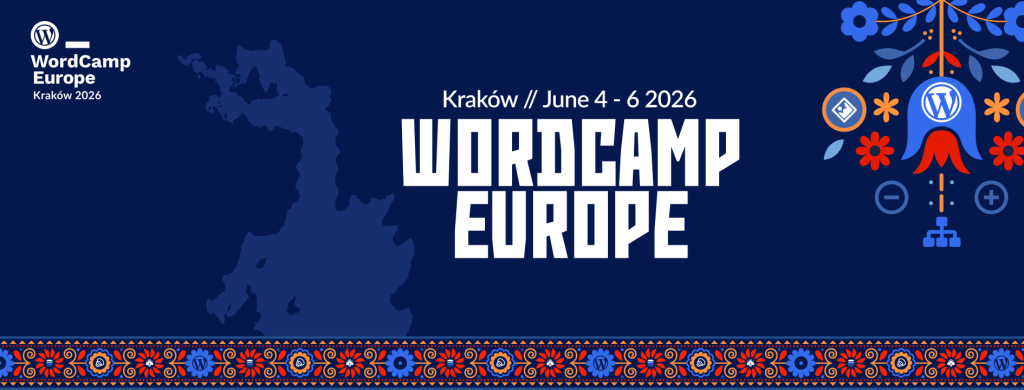
WordCamp Europe 2026 is set to convene the global WordPress community in Kraków, Poland, from June 4 to 6. This event promises more than just networking and presentations—it offers a focused exploration of WordPress’s current state and its trajectory through a program that spans development, AI, accessibility, security, and beyond.
- WCEU 2026 highlights WordPress’s expanding role from institutional use cases to AI integration and accessibility.
- Keynotes reveal critical insights on large-scale WordPress adoption and strategic project direction.
- Sessions dissect real-world challenges like SEO evolution, AI workflows, and sustainable development practices.
- Practitioners gain actionable knowledge applicable to agency workflows, site management, and plugin development.
- Security and trust remain focal points, emphasizing the complex landscape of AI-assisted threats and permission management.
What Happened
WordCamp Europe 2026 will take place at the ICE Kraków Congress Centre from June 4–6, 2026. The event features Contributor Day, two full conference days, and a program shaped by the latest trends and practical needs of the WordPress ecosystem. This year’s agenda includes two official keynotes: one detailing CERN’s migration of 800+ websites to a WordPress-based CMS, and another with WordPress co-founder Matt Mullenweg reflecting on the platform’s future.
The conference schedule is organized into thematic tracks covering development, accessibility, AI, content strategy, search, business, security, and community. Notable sessions include panels on the future of SEO, hands-on workshops on developer portfolios and Full Site Editing (FSE), and discussions on AI-driven marketing and operational workflows. Security talks will address AI-assisted spam detection and plugin permission models. The event aims to provide attendees with both strategic perspectives and practical tools.
Why This Matters
WordCamp Europe 2026 stands at a crossroads where WordPress’s maturity intersects with emerging technology trends and institutional adoption. The CERN keynote signals a significant milestone: WordPress is not only a publishing tool for small to medium sites but is increasingly viable for large-scale enterprise-level deployments. This challenges prevailing assumptions about WordPress’s scalability and governance—key operational concerns for agencies managing complex site networks or clients in regulated environments.
The emphasis on AI throughout the program reflects how WordPress professionals must adapt to AI’s growing influence on content creation, search visibility, and workflow automation. Unlike broad AI hype, sessions like Vito Peleg’s on agentic AI and Monika Dimitrova’s focus on strategy-aware AI use provide grounded insights into integrating AI without sacrificing brand identity or operational control.
SEO’s evolution, highlighted by panels including experts like Kacper Bartoszak and Jovana Smoljanovic Tucakov, underscores the necessity for WordPress developers and content strategists to rethink optimization in an AI-native search landscape. This affects plugin development, theme architecture, and content workflows, especially as generative search engines change how users discover content.
Accessibility sessions reaffirm WordPress’s commitment to inclusive design as a foundational principle—not just an afterthought. For developers and agencies, this means embedding accessibility into every phase of project execution, from theme development to content structuring.
Security remains a critical concern, especially with AI-assisted bots and evolving permission models. The conference’s focus on advanced spam detection and secure plugin permissions signals that WordPress hosting environments and site operators must continuously refine their security posture to mitigate emerging threats.
What This Means for WordPress Users
Agencies managing multiple client sites should pay close attention to the institutional adoption keynote. The CERN case study offers a blueprint for scaling WordPress with custom governance and infrastructure strategies, relevant for clients with large or complex web estates. Expect a push toward managed WordPress services that can accommodate such scale reliably.
Developers must consider how AI integration affects plugin and theme capabilities. Sessions promising practical AI workflows indicate a shift from experimental AI tools to operationalized systems—developers should begin evaluating AI APIs and automation frameworks in their stacks.
Content creators and SEO specialists need to reassess their approaches to discovery and visibility. As AI-generated search changes the rules, relying solely on traditional SEO plugins or tactics will be insufficient. Incorporating semantic content strategies and AI-aware SEO tools will become essential.
Site operators and security teams should anticipate new threats arising from AI-assisted abuse and focus on adopting more granular permission controls within WordPress. Plugins that implement robust ability checks and AI-powered spam filters will play an increasing role in maintaining site integrity.
Finally, educators and community leaders should leverage the accessibility and documentation sessions to foster inclusive practices that align with WordPress’s core values, ensuring that the ecosystem remains open and usable for all users.
Frequently Asked Questions
What makes the CERN WordPress migration significant for agencies?
It demonstrates WordPress’s capability to serve as a centralized CMS across hundreds of sites, addressing governance, custom infrastructure, and scalability challenges relevant to large enterprise clients.
How will AI impact WordPress workflows according to WCEU 2026?
AI is moving beyond content prompts toward integrated systems that automate marketing, product management, and development tasks, requiring teams to adapt their processes to leverage AI efficiently without losing strategic focus.
Are traditional SEO plugins still effective in an AI-driven search environment?
Traditional SEO tools remain useful but need to evolve. AI-native search demands semantic content, structured data, and new optimization tactics to maintain visibility, as discussed in the conference panels.
What practical steps can developers take to improve WordPress site accessibility?
Incorporate accessibility from the design phase, use semantic HTML, adhere to ARIA standards, and ensure themes and plugins support keyboard navigation and screen readers, as emphasized in WCEU sessions.
How should site operators address AI-assisted spam and security threats?
Implement AI-powered spam detection systems, refine plugin permission models using the Abilities API, and maintain vigilant monitoring to respond to evolving bot behaviors.