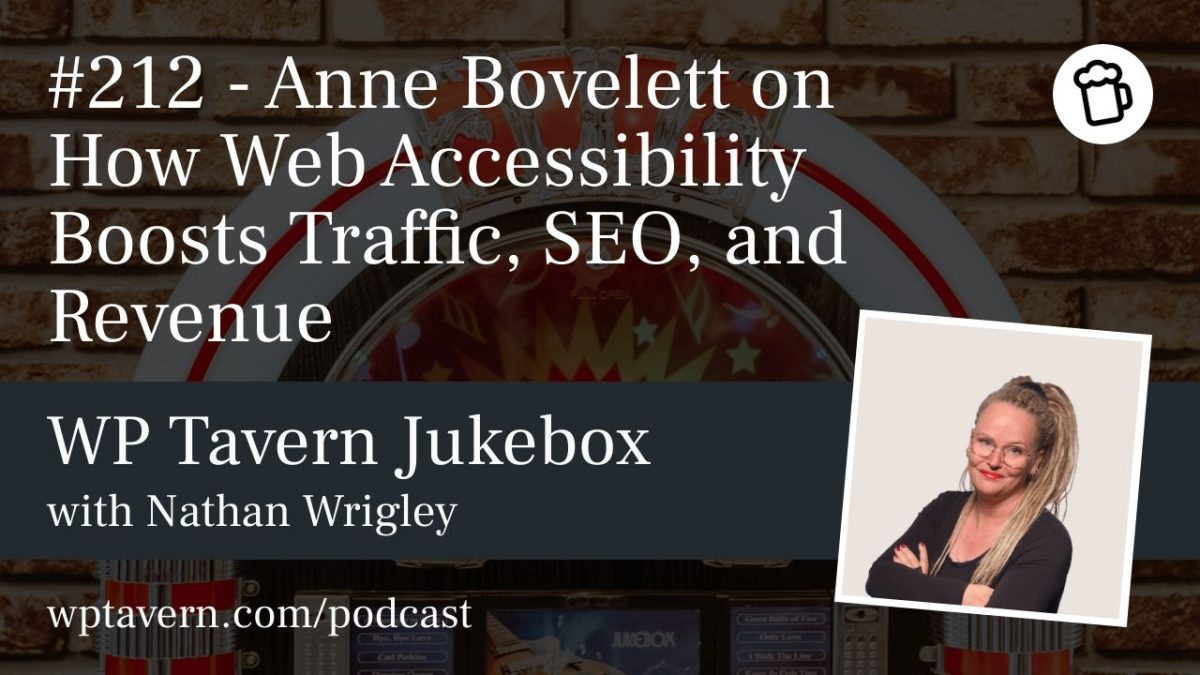
What if optimizing your WordPress website for web accessibility could not only make your site more inclusive but also increase your traffic, boost your SEO performance, and generate more revenue? Anne Bovelett, a seasoned accessibility strategist, argues that it’s not just possible—it’s essential.
Key Takeaways
- Web accessibility isn’t just ethical; it’s a business strategy that drives traffic, SEO rankings, and revenue.
- Anne Bovelett’s approach leverages universal design principles to translate compliance into financial gains.
- Accessibility benefits include reduced support costs, broader audience reach, and stronger domain authority.
- Businesses ignoring accessibility risk burnout, compliance penalties, and lost opportunities.
Why Accessibility Matters More Than Ever
Web accessibility has long been framed as a moral imperative—a way to ensure that digital spaces are usable for everyone, including people with disabilities. However, in her appearance on the WP Tavern podcast, Anne Bovelett emphasized that accessibility is also a strategic advantage. “Neglecting accessibility means you are leaving serious money on the table,” she said, referencing studies that show compliant websites enjoy higher organic traffic and better keyword rankings.
According to Anne, accessible websites reduce friction for all users, not just those with disabilities. Features like proper heading structure, alt text for images, and keyboard-friendly navigation improve usability for everyone and signal quality to search engines. The result? Better SEO performance, broader audience reach, and increased conversions.
The Business Case for Accessibility
Anne’s insights are backed by data. Studies cited in the podcast reveal that businesses prioritizing accessibility have seen financial opportunities worth millions or even billions of dollars. These gains are driven by improved user experiences, stronger domain authority, and reduced support costs.
For example, accessible websites tend to rank higher in search engine results because they meet Google’s technical requirements for usability. This leads to better visibility for businesses and higher organic traffic. Additionally, companies that invest in accessibility often find they can serve previously untapped markets, such as users with disabilities, older adults, and people in low-bandwidth environments.
Challenges in Implementing Accessibility
Despite its clear benefits, accessibility often takes a backseat in web development. Anne highlighted several reasons for this, including a lack of awareness and unrealistic expectations placed on accessibility specialists. “Many organizations assign one person to handle compliance for thousands of products or websites. This is a recipe for burnout,” she explained.
Anne also pointed out that accessibility doesn’t have to be overwhelming. “Learning accessible coding and universal design principles isn’t complex,” she said. “What’s hard is navigating the organizational hurdles.” Her advice? Treat accessibility as a core business strategy rather than an afterthought.
What This Means for WordPress Users
For WordPress professionals, Anne’s message is clear: accessibility is no longer optional. Developers and site operators should prioritize accessible design not just to meet legal requirements but to unlock tangible business benefits.
Agencies could use accessibility as a selling point to differentiate themselves in a crowded market. By demonstrating measurable SEO and revenue improvements for clients, they can justify higher service fees and build long-term relationships. Plugin and theme developers should ensure their products comply with accessibility standards, as this will widen their customer base and reduce support requests.
Anne’s work highlights a broader trend: the shift from viewing accessibility as a technical compliance issue to recognizing it as a growth strategy. This focus aligns well with WordPress’s mission of democratizing publishing while also creating new opportunities for monetization.
Frequently Asked Questions
How does accessibility improve SEO?
Accessible websites improve usability, which search engines reward. Features like proper heading structure and alt text enhance crawlability and user experience, boosting rankings.
What are the costs of neglecting accessibility?
Ignoring accessibility can lead to compliance penalties, lost traffic, and missed opportunities to reach underserved audiences, ultimately affecting revenue.
Can small businesses afford accessibility?
Yes, small businesses can start with simple changes like adding alt text to images and ensuring keyboard navigation, which deliver immediate benefits without significant investment.
Is accessibility complex to learn?
While it requires effort, accessible coding and universal design principles are straightforward to adopt. The key challenge lies in organizational prioritization.