Some links on this page are affiliate links. We may earn a commission when you click through and make a purchase, at no additional cost to you.
Enterprise organizations are facing a pivotal moment in digital content management. In 2026, selecting the right enterprise CMS platform is more than a technical decision—it’s a strategic move that can define your organization’s ability to compete in a fast-changing digital landscape. With AI-driven customer journeys, multi-channel commerce, and global storytelling at the forefront, enterprise CMS platforms are the backbone of modern digital operations.
Key Takeaways
- Enterprise CMS platforms are critical for global scalability, governance, and omnichannel content delivery.
- WordPress VIP is noted for its agility, security, and massive developer ecosystem, making it ideal for publishers and marketing teams.
- Adobe Experience Manager Sites excels in creative tool integration but comes with high costs and complex implementation.
- Acquia Drupal offers managed enterprise-grade solutions but requires specialized expertise for optimal use.
- Choosing an enterprise CMS involves balancing scalability, security, workflow, and developer experience.
What Is an Enterprise CMS?
An enterprise content management system (CMS) is built to handle the scale and complexity of massive organizations. It moves beyond the functionality of standard CMS platforms by offering centralized content management, global scalability, advanced security, and governance features tailored to enterprise needs.
Unlike traditional CMS platforms, which primarily support single websites, enterprise CMS systems empower organizations to manage and distribute content across multiple digital channels—websites, mobile apps, kiosks, and even AI training datasets. This ensures global brands maintain a “single source of truth” for their digital assets, enabling distributed teams to operate efficiently while adhering to strict brand and security protocols.
How Enterprise CMS Platforms Are Evaluated
Evaluating the best enterprise CMS platforms involves assessing their scalability, flexibility, security, workflow management, developer experience, and content operations capabilities. Each factor plays a critical role in determining the platform’s total cost of ownership (TCO) and operational agility.
For example, scalability ensures seamless growth during traffic surges or global expansion. Security measures like FedRAMP certification or SOC2 compliance protect sensitive data. Workflow management features enable multi-team collaboration across regions, while developer experience (DX) ensures teams can quickly deploy new features without friction. Finally, the user interface must empower non-technical marketers to manage content independently without relying heavily on IT.
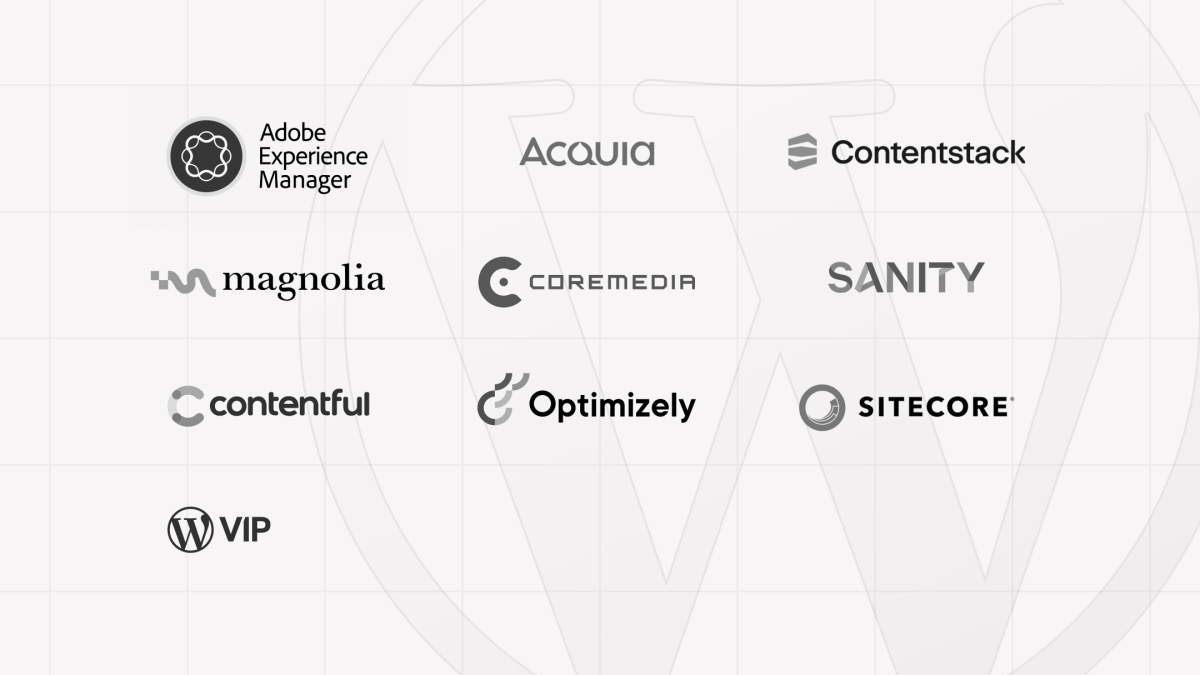
Top Enterprise CMS Platforms in 2026
1. WordPress VIP
WordPress VIP is the enterprise version of the world’s most popular CMS, tailored for high-scale media companies, government agencies, and global corporations. It pairs the familiar WordPress interface with a fully managed cloud infrastructure.
Business Fit: Ideal for publishers, global content teams, and organizations requiring reliable, fast time-to-market solutions.
Strengths: Flexible Gutenberg block creation, FedRAMP-authorized security, and extensive ecosystem integrations.
Limitations: PHP-based architecture may challenge developer teams accustomed to JavaScript. React or Node.js teams may require ramp-up time.
2. Adobe Experience Manager Sites
Adobe Experience Manager (AEM) Sites serves as the cornerstone of Adobe Experience Cloud, offering deep integration with Adobe Creative Cloud and Analytics tools.
Business Fit: Best for enterprises heavily invested in Adobe’s ecosystem requiring centralized solutions for marketing and creative workflows.
Strengths: Sophisticated digital asset management and native integration with Adobe tools.
Limitations: High costs and complex implementation cycles, often needing dedicated teams.
3. Acquia Drupal
Acquia provides managed enterprise-grade solutions built on the robust Drupal platform, offering flexibility and scalability for businesses with specialized needs.
Business Fit: Suitable for organizations requiring open-source flexibility paired with enterprise-grade cloud support.
Strengths: Customizable workflows and integration with third-party tools.
Limitations: Requires specialized Drupal expertise for effective implementation.
What This Means for WordPress Users
For WordPress professionals, the growing prominence of enterprise CMS platforms signals an opportunity to expand into high-value client markets. WordPress VIP’s positioning as a scalable, secure solution for enterprise teams means that agencies and developers familiar with WordPress can tap into enterprise-level contracts without abandoning their skill set.
This also highlights a shift in content management priorities—security, scalability, and omnichannel delivery are no longer optional. For freelancers and plugin developers, aligning products and services with these priorities could open new revenue streams. Expect more demand for compliance-ready plugins, headless integrations, and AI-assisted tools.
Ultimately, this evolution reflects the increasing complexity of digital ecosystems and the need for CMS platforms capable of supporting global brands with agility and control.
Frequently Asked Questions
What is the difference between a standard CMS and an enterprise CMS?
A standard CMS focuses on managing a single website, while an enterprise CMS supports large-scale content operations across multiple channels, users, and workflows.
Is WordPress VIP suitable for all enterprises?
WordPress VIP is best suited for enterprises needing scalability, security, and extensive developer ecosystems, but it may not fit organizations heavily reliant on JavaScript frameworks.
How does Adobe Experience Manager compare to WordPress VIP?
Adobe Experience Manager offers deeper integration with creative tools but comes with higher costs and complexity, while WordPress VIP focuses on agility and ease of use.