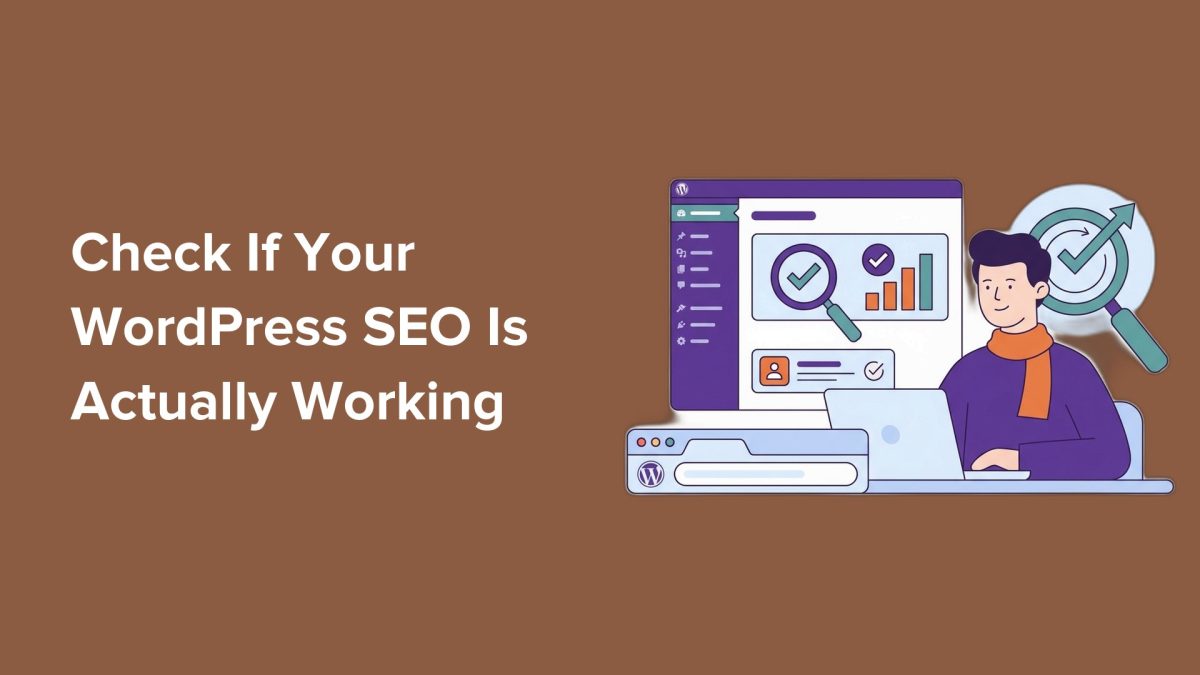
Many WordPress site owners publish content for months but remain uncertain whether their SEO efforts are truly effective. SEO results rarely appear in one clear place; instead, they manifest across multiple metrics such as organic traffic, keyword rankings, indexed pages, click-through rates, and conversions. This tutorial walks you through practical ways to verify if your WordPress SEO is working, using tools like MonsterInsights, All in One SEO (AIOSEO), and Google Search Console.
Key Takeaways
- Organic traffic growth is the primary indicator your SEO is gaining traction.
- Google Search Console helps verify if your pages are indexed and measuring keyword performance.
- Click-through rates reveal how compelling your search listings are to users.
- Tracking conversions shows if SEO is driving meaningful actions on your site.
- Combining tools like MonsterInsights and AIOSEO simplifies monitoring SEO progress from your WordPress dashboard.
What Does It Mean for SEO to Be Working?
SEO success isn’t a single event but a pattern of improvements across several areas. In practice, real progress often means:
- Increasing Organic Traffic: A steady rise in visitors coming from search engines over weeks or months.
- Pages Getting Indexed: Your content appears in search results, indicating Google recognizes your site.
- Improving Keyword Rankings: Target keywords climb higher in search results, even small moves from page 3 to 2 are positive.
- Higher Click-Through Rates (CTR): More users are clicking your listings, signaling effective titles and meta descriptions.
- Conversions from SEO Traffic: Visitors finding you via search are completing goals like signing up or purchasing.
Even if not all these factors improve simultaneously, positive trends in some areas indicate your SEO is gaining momentum.
Step 1: Track Organic Traffic Growth Over Time
Organic traffic consists of visitors who reach your site through unpaid search results. This metric directly answers the question, “Are people finding my site via search engines?” Monitoring organic traffic over time reveals whether your SEO efforts are increasing your visibility.
For context, different site types have varied benchmarks for healthy organic traffic growth. For example, a niche blog might see slow but steady increases, while an e-commerce site may expect faster growth.
Tip: Organic search remains the dominant traffic source for most WordPress sites, but emerging AI-driven search platforms are starting to influence traffic patterns. Preparing your content for AI indexing, known as Generative Engine Optimization (GEO), can future-proof your SEO.
How to See Your Organic Traffic With MonsterInsights
Google Analytics (GA) is the industry standard for traffic measurement but can overwhelm beginners with its complex interface. MonsterInsights simplifies this by connecting GA directly to your WordPress dashboard and presenting key metrics clearly.
- Install and activate the MonsterInsights plugin.
- Connect it with your Google Analytics account following the setup wizard.
- Navigate to Insights > Reports in your WordPress admin area.
- Review the Overview Report to see your total traffic, including organic search visits.
This quick view helps you track organic traffic trends without leaving WordPress.
How to Check Organic Traffic in Google Analytics
If you prefer using GA directly, here’s how to find your organic traffic data:
- Log in to your Google Analytics account.
- Go to Acquisition > All Traffic > Channels.
- Click on the Organic Search channel to see all traffic coming from search engines.
- Adjust the date range to compare traffic over weeks or months.
This report shows exact visitor counts and trends, though it requires more navigation than MonsterInsights.
Step 2: Verify Your Pages Are Indexed in Google
Your SEO can only work if Google indexes your pages, allowing them to appear in search results. If pages aren’t indexed, they won’t generate search traffic regardless of quality.
How to Check Indexing in Google Search Console
Google Search Console (GSC) provides direct insight into how Google views your site’s pages.
- Confirm your site is added and verified in GSC.
- Use the URL Inspection tool to enter URLs you want to check.
- If a page is indexed, GSC will confirm it. If not, it will provide reasons such as crawl errors or noindex tags.
- Review the Coverage report to see indexed, excluded, or error pages in bulk.
This helps you identify if indexing issues are blocking your SEO progress.
Step 3: Monitor Your Target Keyword Rankings
Keyword rankings show how high your pages appear for specific search queries. While Google Search Console shows average position data, dedicated rank tracking tools provide more detailed analysis over time.
For WordPress sites, plugins like AIOSEO often include rank tracking features that integrate with your dashboard, or you can use external tools like SEMrush or Ahrefs for deeper insights.
Step 4: Analyze Your Organic Click-Through Rate (CTR)
CTR measures the percentage of users who see your site in search results and actually click through. Even if you rank well, low CTR may mean your titles or descriptions are not enticing enough.
How to Check CTR in Google Search Console
- Log in to GSC and navigate to the Performance report.
- Set the report to show Queries, Pages, or Countries.
- Review the CTR column to identify which keywords or pages have strong click rates.
Improving CTR often involves optimizing meta titles and descriptions to be more relevant and appealing.
What Does CTR Tell You?
CTR is a crucial engagement metric that helps you understand how effective your search snippets are at attracting visitors. High CTR combined with good rankings indicates well-crafted search listings.
Step 5: Measure SEO-Driven Conversions and Goals
Ultimately, SEO success is not just about traffic but about driving meaningful actions such as newsletter signups, contact form submissions, or sales.
How to Track Conversions in Google Analytics
- Set up Goals or Events in GA for the actions you want to measure (e.g., form submissions, purchases).
- Navigate to Acquisition > All Traffic > Channels and select Organic Search.
- Review the conversion metrics associated with organic traffic to see how SEO contributes to your objectives.
For WordPress users, integrating MonsterInsights or other analytics plugins can simplify goal tracking within the dashboard.
Simple Monthly SEO Checklist
- Check organic traffic trends in MonsterInsights or Google Analytics.
- Review indexing status in Google Search Console.
- Monitor keyword rankings and adjust content as needed.
- Improve meta titles and descriptions to boost CTR.
- Evaluate SEO-driven conversions and optimize calls to action.
How Long Does SEO Take to Work?
SEO is a gradual process. For most WordPress sites, noticeable improvements can take 3 to 6 months, depending on competition, content quality, and site authority. Patience and consistent effort are essential. Regularly measuring progress using the steps above will help you stay on track.
What This Means for WordPress Users
We recommend WordPress site owners and developers adopt a data-driven approach to SEO rather than relying on guesswork. Using tools like MonsterInsights and Google Search Console together provides a clear picture of organic search performance without overwhelming complexity.
For agencies and freelancers managing client sites, establishing these measurement routines enables proactive optimizations and transparent reporting. It also sets realistic expectations on timelines and results.
As search evolves, especially with AI-driven platforms emerging, broadening SEO strategies to include Generative Engine Optimization will become increasingly important. For now, mastering the fundamental metrics covered here builds a solid foundation.
Frequently Asked Questions
How often should I check my SEO performance?
Monthly reviews are sufficient for most sites to track trends and identify issues. Frequent daily checks can cause unnecessary stress without meaningful insight.
Can I rely only on Google Analytics to measure SEO success?
Google Analytics provides valuable traffic data, but combining it with Google Search Console and rank tracking tools gives a fuller picture of indexing, keywords, and click-through rates.
What if my pages are not indexed by Google?
Check for technical issues like noindex tags, crawl errors, or blocked robots.txt files. Fixing these will help Google index your pages and make SEO efforts effective.
Is increasing keyword rankings the most important SEO goal?
Improving rankings is important but should be balanced with CTR and conversions. High rankings with low engagement or conversions indicate further optimization is needed.