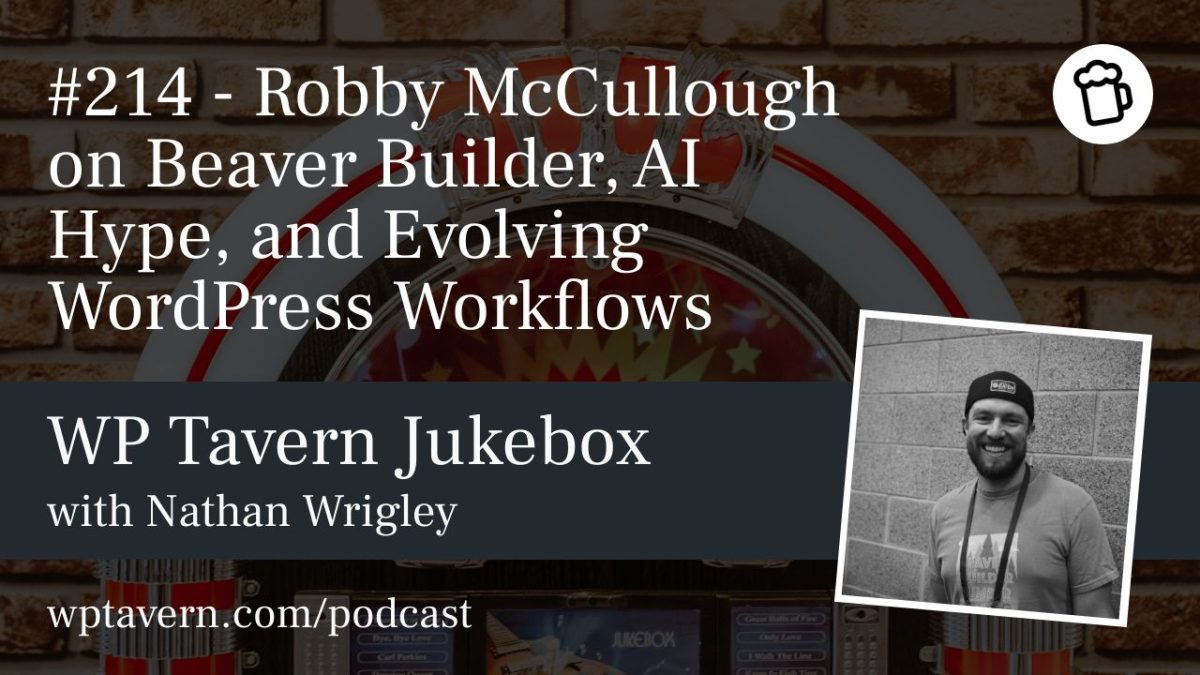
Robby McCullough, co-founder of Beaver Builder, joined the WP Tavern Jukebox Podcast to discuss the journey of one of WordPress’s earliest and longest-standing page builders. After nearly 12 years in the space, Robby shares insights on navigating major life and business changes while steering Beaver Builder through the rapid evolution of web development workflows, including the rise of AI.
Key Takeaways
- Beaver Builder has matured over nearly 12 years, maintaining relevance amid shifting web development trends.
- The team deliberately delayed integrating AI to avoid hype-driven features, focusing now on meaningful AI-assisted workflows.
- AI is transitioning from a buzzword to practical tools capable of coding and enhancing website building experiences.
- Page builders still hold value despite AI’s rise, especially for users needing control and customization beyond automated site generation.
- Community, human connection, and understanding underlying technologies remain critical in the evolving WordPress ecosystem.
Beaver Builder’s Enduring Presence in WordPress
Beaver Builder was launched nearly 12 years ago as one of the pioneering visual page builders for WordPress. Robby McCullough reflects on the plugin’s longevity, noting it has been a steady presence through the ups and downs of WordPress’s evolution. “We consider ourselves OGs of the space,” Robby remarked, emphasizing the team’s experience navigating a rapidly changing landscape.
In practice, Beaver Builder helped democratize website design, moving away from hand-coded pages to drag-and-drop visual editing. This shift considerably lowered barriers for agencies, freelancers, and site owners alike. Yet, Robby notes that despite the rise of new tools and platforms, Beaver Builder remains relevant by continuously adapting to user needs and integrating modern workflows.
Deliberate Pause on AI Integration
When AI started dominating tech conversations about a year ago, many products rushed to add superficial AI features, often limited to generating headings or basic copy. Robby explained that Beaver Builder intentionally avoided jumping on this AI bandwagon early. The team was cautious of hype and wanted to ensure any AI-driven features genuinely enhanced the user experience rather than serving as gimmicks.
“It felt like everyone was slapping a GPT wrapper on their products without real depth,” Robby said. This measured approach allowed Beaver Builder to observe and understand the evolving AI landscape before committing resources.
AI’s Shift from Buzzword to Agentic Tool
Robby shared that the latest generation of AI tools is no longer just hype but offers exciting new possibilities. These tools are becoming agentic, capable of writing code, assisting in complex workflows, and re-imagining how users build websites. This evolution signals a shift in web development where AI becomes a collaborative partner rather than just a novelty.
In real-world deployments, AI-assisted coding and content generation can speed up workflows, but the human element remains essential for creativity, quality control, and customization. Beaver Builder aims to blend traditional visual editing with AI capabilities to empower users without removing their control.
The Future Role of Page Builders Amid AI Advances
With AI tools able to generate entire websites from simple prompts, some question whether page builders still have a place. Robby believes page builders remain vital for users who need granular control, custom layouts, and integrations that automated AI tools might not handle well.
He emphasized the importance of understanding the underlying technology, warning that as web development becomes more abstracted through AI, some technical literacy might be lost. Page builders like Beaver Builder serve as a bridge, providing visual tools while maintaining transparency and user agency.
Business Challenges and Community Importance
Robby reflected on the challenges of managing a product business amid rapid technological change and personal life shifts such as welcoming a new baby and moving homes. Balancing these factors requires adaptability and focus on long-term vision rather than chasing every trend.
Beyond technology, Robby highlighted the enduring value of community within WordPress. Human connection, shared knowledge, and collaboration remain foundational as the ecosystem evolves. Beaver Builder’s success is tied to its engagement with users and the broader WordPress community.
What This Means for WordPress Users
For WordPress professionals, Robby’s insights signal the need for a balanced approach to AI adoption. Rushing to add AI features without clear benefits can dilute product value. Instead, focusing on AI as a tool to augment workflows and enhance user control is a more sustainable path.
Site owners and agencies should recognize that while AI can automate parts of website creation, page builders still offer critical flexibility for customization and integration. Investing in understanding new AI capabilities alongside familiar tools like Beaver Builder will position developers and businesses to leverage both effectively.
This conversation also warns against losing touch with the technical foundations of WordPress. As AI abstracts complexity, maintaining a grasp of underlying systems ensures better problem-solving and innovation.
Ultimately, the WordPress community’s strength lies in shared expertise and collaboration. Staying engaged with ecosystem developments and contributing to discussions will help practitioners navigate changes with confidence and resilience.
Frequently Asked Questions
Why did Beaver Builder delay integrating AI features?
The team wanted to avoid AI hype-driven gimmicks and waited until AI tools matured to offer meaningful, practical enhancements that truly improved user workflows.
How is AI changing WordPress web development?
AI is evolving from basic content generation to agentic tools that can write code and assist with building websites, speeding up development while still requiring human oversight.
Are page builders still relevant in the age of AI website generation?
Yes, because page builders provide granular control, customization, and integration capabilities that automated AI-generated sites may lack, especially for complex or unique needs.
What challenges do product founders face with rapid AI advancements?
Founders must balance rapid AI innovation with product stability, user needs, and business sustainability while adapting to personal life changes and market shifts.