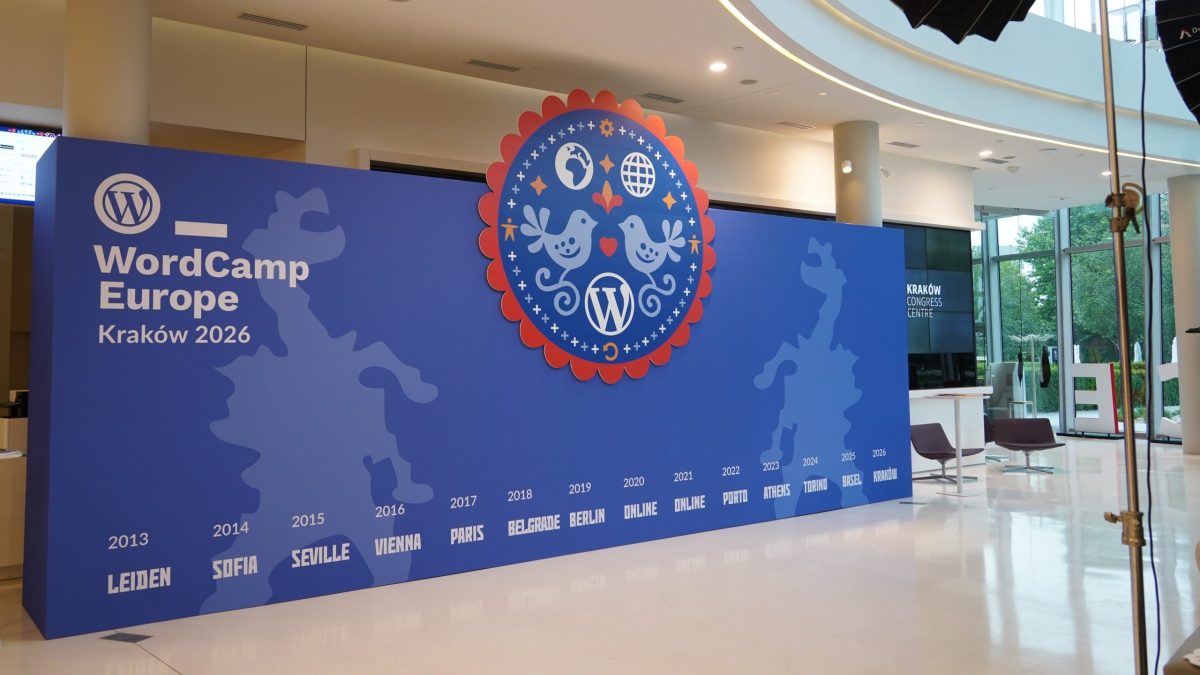
WordCamp Europe 2026 convened in Kraków from June 4 to 6, drawing 2,458 attendees from 81 countries to the ICE Kraków Congress Centre. This edition marked a significant moment in WordPress’s evolution, spotlighting core development, AI integration, and the expanding ecosystem of contributors.
- Contributor Day emphasized onboarding and collaborative improvements across WordPress’s wide project scope, including Core, Polyglots, and Plugins.
- CERN announced migrating its flagship website to WordPress, showcasing large-scale automated content migration and Kubernetes-powered infrastructure.
- WordPress 7.0 was central, introducing a native AI client, a new Abilities API, and a Connectors screen for AI providers, signaling a shift in WordPress’s core capabilities.
- Sessions stressed that AI integration is a platform-wide asset, encouraging developers to build interoperable tools rather than isolated features.
- The event demonstrated WordPress’s continued maturity as an open-source platform balancing innovation, accessibility, and contributor diversity.
What Happened
WordCamp Europe 2026, Europe’s largest WordPress conference, brought together 2,458 participants from 81 countries in Kraków, Poland. Nearly 25% were first-time attendees. The event featured 49 talks and eight workshops across themes like core development, artificial intelligence (AI), business strategies, and the open web. The conference began with Contributor Day, a participatory session where volunteers worked directly on WordPress improvements. Contributors were organized into teams focused on Polyglots (translations), Documentation, Support, Core, Performance, Testing, Themes, and Plugins review.
The opening keynote was delivered by Joachim Valdemar Yde and Francisco Borges Aurindo Barros from CERN, the laboratory where the World Wide Web originated. CERN announced that its main site, home.cern, had been fully migrated to WordPress using a custom automated tool that converts legacy content into Gutenberg blocks. Their infrastructure leverages Kubernetes for rapid site provisioning and enforces a standard theme and security-hardened plugins.
WordPress 7.0 was a recurring subject throughout the conference. The release introduces a native AI client embedded into core, a new Abilities API allowing plugins to declare capabilities in a discoverable manner, and a Connectors screen to integrate AI providers like OpenAI, Anthropic, or Google Gemini. A panel of contributors discussed the complex workflows and coordination behind the release.
AI sessions emphasized that these capabilities are designed as platform-level tools for all developers to leverage, not isolated features for specific plugins. Speaker Anukasha Singh shared practical approaches for harnessing AI within WordPress projects.
Why This Matters
WordCamp Europe 2026 underscored WordPress’s position as a platform evolving beyond a traditional CMS toward a flexible, AI-enabled foundation. Contributor Day highlighted the breadth and health of the community, reflecting the project’s complexity and the necessity of organized collaboration to maintain quality and security.
CERN’s migration is a landmark case study in scaling WordPress for a massive, institutional web presence. Their approach—automated content transformation into Gutenberg blocks and Kubernetes-based infrastructure—demonstrates how WordPress can handle enterprise-grade demands while preserving editorial autonomy. For agencies and developers managing large portfolios, this model illustrates the power of combining headless capabilities, container orchestration, and standardized themes/plugins to streamline operations.
WordPress 7.0’s AI integration signals a paradigm shift. Embedding a native AI client in core and exposing capabilities via the Abilities API creates a standardized ecosystem for AI-powered enhancements. This prevents fragmentation by enabling plugins to interoperate on a common platform rather than reinventing AI integrations independently. For developers, it clarifies how to build future-proof tools that plug into WordPress’s AI infrastructure.
The Connectors screen simplifies onboarding AI providers, lowering the technical barrier for site operators to adopt AI functionalities. By supporting multiple providers like OpenAI and Google Gemini, WordPress promotes vendor neutrality and flexibility, crucial for an open ecosystem.
However, this expansion introduces trade-offs. Integrating AI at the core raises questions about resource consumption, security risks of external AI calls, and governance of AI outputs. Hosting providers must consider infrastructure implications, including potential latency and cost spikes. Security teams will need to scrutinize new attack surfaces exposed by AI connectors and plugin interactions.
What This Means for WordPress Users
Agencies and developers should start exploring WordPress 7.0’s AI APIs early to understand how to integrate AI features in client projects coherently. The Abilities API offers a structured way to advertise plugin capabilities, enhancing interoperability and user experience. Familiarity with the Connectors screen will be essential to configure AI providers efficiently without custom coding.
Site operators can anticipate more intelligent editing and content creation tools emerging as AI becomes a first-class citizen in WordPress. However, they should evaluate hosting plans for compatibility with AI workloads and monitor the security posture of any AI-powered plugins.
Hosting providers need to prepare for increased demand on resources due to AI client usage, such as higher CPU and API request volumes. Offering managed AI integration services or optimized infrastructure for AI workloads could become a competitive advantage.
Contributor community members should leverage Contributor Day’s onboarding model to attract and mentor new contributors, especially as the project incorporates AI and infrastructure complexity. The CERN migration shows the importance of automation and infrastructure tooling as areas ripe for collaborative improvement.
Frequently Asked Questions
What is the Abilities API introduced in WordPress 7.0?
The Abilities API allows plugins to declare their capabilities in a standardized way so that other plugins and core features can discover and interact with them. This promotes interoperability and consistent user experiences across AI and other advanced integrations.
How does CERN’s migration to WordPress affect large organizations?
CERN’s migration demonstrates that WordPress can scale for complex, high-profile institutional websites through automated content migration and Kubernetes-based provisioning. It provides a reference architecture for organizations needing large multisite or multi-project deployments with centralized management.
Are there security concerns with WordPress’s new AI features?
Yes. Integrating AI connectors introduces new external dependencies and potential attack vectors. Site operators and developers must carefully vet AI providers, ensure secure API communications, and monitor plugin interactions to mitigate risks.
Will WordPress’s AI integration require specific hosting upgrades?
AI workloads can increase CPU usage and network traffic due to API calls to external services. Hosting providers and site owners should assess plans for performance and cost implications and consider AI-optimized hosting solutions.
How can new contributors get involved in WordPress development?
Contributor Day at WordCamp Europe offers structured onboarding with mentors and focused teams across areas like Core, Polyglots, and Plugins. Remote participation via the Make WordPress Slack is also supported, making it accessible globally.
Sources: WordPress.org News, WordCamp Europe 2026 official reporting.