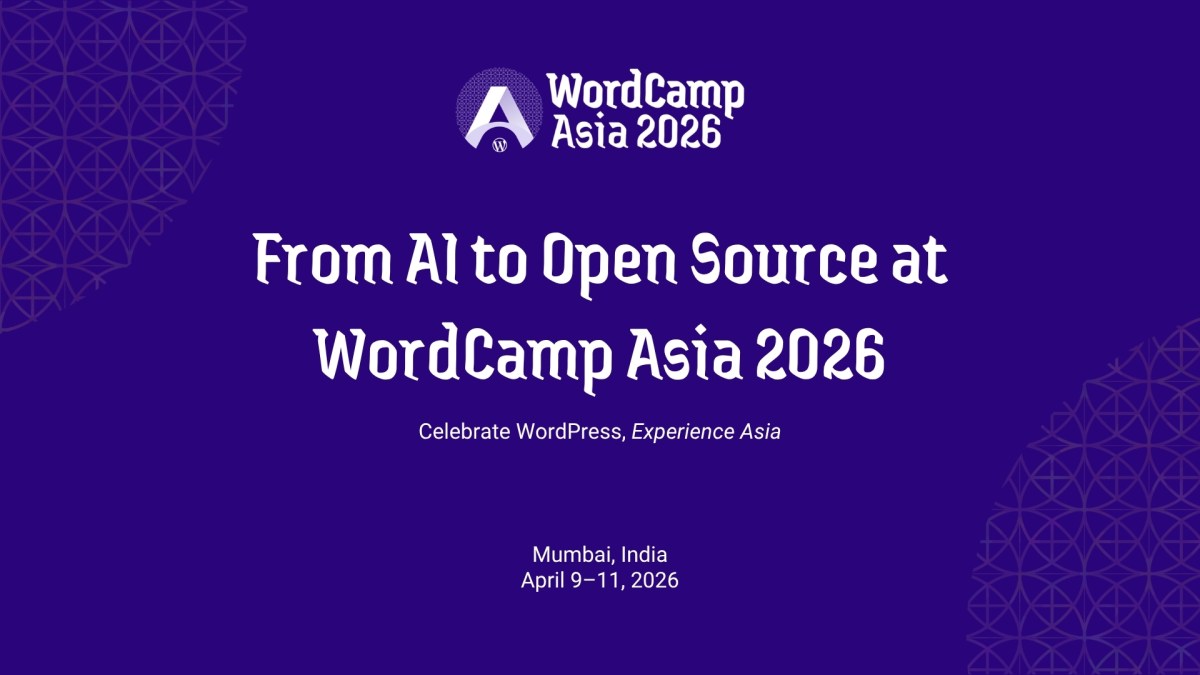
The WordPress community is gearing up for WordCamp Asia 2026, set to take place from April 9 to 11 at the Jio World Convention Centre in Mumbai, India. This year’s event promises to dive deep into themes shaping the future of WordPress: artificial intelligence (AI), enterprise scalability, developer workflows, and open source innovation. With keynote speakers, technical workshops, and discussions spanning these pivotal topics, the conference is poised to offer valuable insights for WordPress professionals across disciplines.
Key Takeaways
- WordCamp Asia 2026 emphasizes AI, enterprise WordPress, and developer workflows, reflecting key trends in the ecosystem.
- Keynote sessions feature Ma.tt Mullenweg and Mary Hubbard, focusing on open source leadership and AI’s impact on WordPress.
- Hands-on workshops will include automation workflows and AI-powered development practices for immediate implementation.
- Enterprise WordPress sessions address architecture, scalability, and business-critical use cases for large-scale organizations.
- The event highlights WordPress’s ability to connect software innovation with community-driven growth.
Keynotes and Themes for WordCamp Asia 2026
Opening the event, WordPress co-founder and Automattic CEO Ma.tt Mullenweg will deliver a keynote exploring the future of the open web and WordPress’s role in it. Joining him, Mary Hubbard, the Executive Director of WordPress, will discuss leadership, education initiatives, and AI’s influence on the platform in a fireside chat moderated by Shilpa Shah.
These keynote sessions set the stage for this year’s themes, which include AI, scalability, and community growth. They aim to provide attendees with a forward-looking perspective on how WordPress will evolve to meet new technological and organizational challenges.
Artificial Intelligence: From Concept to Practice
AI is one of the most prominent topics in this year’s event. Sessions led by Fellyph Cintra, Fumiki Takahashi, and Nirav Mehta delve into AI-powered workflows, plugin development, and autonomous testing via WordPress Playground. For content creators, Adeline Dahal’s session highlights structuring WordPress content to make it more machine-readable, bridging the gap between human and machine understanding.
These sessions underscore the growing role of automation in WordPress development, not just as a future possibility but as a practical set of tools already reshaping workflows. Attendees will gain actionable knowledge on integrating AI into their WordPress projects.
Enterprise WordPress and Scalability
Enterprise WordPress sessions target the operational complexities that large-scale organizations face when adopting the platform. Talks by Rahul Bansal, James Giroux, Anirban Mukherji, and Abid Murshed focus on scalability, architecture design, and risk management during migrations.
These discussions highlight WordPress’s ability to handle demanding digital environments while maintaining its flexibility. Attendees will learn how to approach enterprise WordPress projects effectively, from observability practices to performance optimization strategies.
Developer Experience and Modern Practices
The developer track focuses on key advancements in WordPress Core tools and modern engineering practices. Sessions include Ryan Welcher’s exploration of the Interactivity API, Jonathan Desrosiers’s insights on automation in open source, and Takayuki Miyoshi’s introduction to schema-sharing for form management.
Additional technical presentations address the WordPress HTML API, Content Security Policy, and evolving plugin development standards. These talks aim to equip developers with skills to build systems that are dynamic, scalable, and maintainable.
Community, Education, and Open Source
Beyond technical discussions, WordCamp Asia 2026 also emphasizes community-driven growth and education. Panels and sessions explore pathways into open source and reflect on the cultural aspects of WordPress, such as contributions and career development. Speakers like Anand Upadhyay, Maciej Pilarski, Kazuko Kaneuchi, and Kotaro Kitamura offer perspectives that connect software innovation with human stories.
This broader focus reminds attendees of WordPress’s strength as both a technological platform and a global community fostering professional and personal growth.
Hands-on Workshops for Immediate Application
Hands-on workshops provide attendees with practical opportunities to apply what they’ve learned. Sessions include automating WordPress installations, building AI agents with self-editing memory, and optimizing development workflows with AI.
These workshops are designed for professionals looking to implement cutting-edge practices in their own projects, ensuring the conference delivers not just ideas but actionable solutions.
What This Means for WordPress Users
WordCamp Asia 2026 reflects the growing complexity and opportunity within the WordPress ecosystem. For developers, the emphasis on AI and automation tools signals a shift toward smarter workflows and more efficient testing practices. Teams should start exploring these tools now to stay competitive.
Enterprise users should pay close attention to sessions on scalability and operational risk. As WordPress continues to expand its capabilities for large-scale projects, agencies and businesses must understand how to navigate these challenges effectively.
The inclusion of community-focused panels and workshops highlights WordPress’s commitment to education and collaboration. Whether you’re a freelancer, agency owner, or developer, these sessions can inspire long-term growth and connection within the ecosystem.
Frequently Asked Questions
What are the key themes at WordCamp Asia 2026?
The event focuses on AI, enterprise WordPress, developer workflows, product strategy, and community growth.
Who are the keynote speakers?
Ma.tt Mullenweg and Mary Hubbard will deliver keynotes, discussing the future of WordPress and AI’s role in the platform.
What are the hands-on workshops about?
Workshops cover topics like automating WordPress installations, AI-driven workflows, and building AI agents with self-editing memory.
How does WordCamp Asia support enterprise WordPress users?
Enterprise sessions focus on scalability, migration risk, and performance optimization for complex projects.
Where can I find the full schedule?
You can explore the full schedule on the official WordCamp Asia website.