Some links on this page are affiliate links. We may earn a commission when you click through and make a purchase, at no additional cost to you.
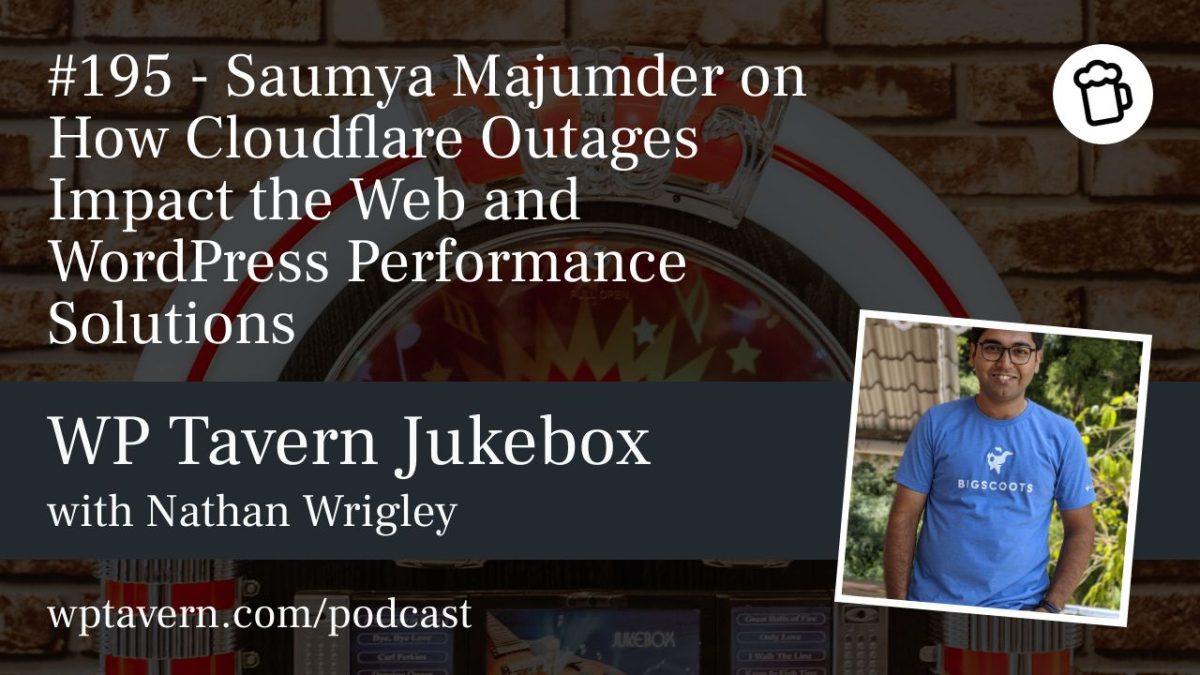
Cloudflare outages don’t just disrupt websites—they reverberate across the entire internet. For WordPress-powered sites, which constitute a significant portion of the web, the stakes are even higher. On the latest episode of the Jukebox Podcast from WP Tavern, Saumya Majumder, lead software engineer at BigScoots, delves into the recent Cloudflare outage and its implications for the web, particularly how it affects WordPress performance solutions.
Key Takeaways
- The recent Cloudflare outage highlighted vulnerabilities in global infrastructure, impacting websites across the internet, including WordPress-powered sites.
- BigScoots mitigates outages by implementing automated failovers and leveraging Cloudflare Enterprise features.
- CDN-level page caching is transforming how WordPress sites deliver content globally, ensuring faster and more reliable performance.
- Saumya Majumder emphasizes that downtime, while inevitable, can be minimized with proactive strategies.
The Ripple Effect of Cloudflare Outages
During the podcast, Majumder unpacked the consequences of a major Cloudflare outage that occurred shortly before the recording. As one of the world’s leading providers of web infrastructure and security services, Cloudflare plays a crucial role in keeping websites fast and secure. However, its massive scale also makes it a single point of failure for many businesses and websites.
Recommended for Developers, enterprises, high-traffic sites
Cloudflare — from Free+
Visit Cloudflare →Some links on this page are affiliate links. We may earn a commission when you click through and make a purchase, at no additional cost to you.
“Even with the most robust systems in place, some downtime is unavoidable,” Majumder explained. The recent outage disrupted services across multiple industries, revealing weaknesses in the global web infrastructure. For WordPress sites, which often rely on Cloudflare for CDN (Content Delivery Network) services, DNS routing, and security, the impact was especially pronounced.
Majumder shared how BigScoots, a managed hosting provider specializing in WordPress, responds to such challenges. Their approach includes automated failovers that shift traffic to backup systems, ensuring websites remain online during outages. “Failovers are critical for minimizing disruption,” he noted.
Innovations in WordPress Performance Solutions
Beyond addressing outages, Majumder highlighted the cutting-edge work his team is doing to enhance WordPress performance. A key focus is CDN-level page caching, which has become increasingly standard among premium hosting providers. Unlike traditional server-side caching, CDN-level caching ensures content is delivered from servers geographically closer to the end user, drastically improving speed and reliability.
“This wasn’t the norm just a few years ago,” Majumder said. “We’ve come a long way from RAM-level server caching to global CDN-based solutions.” BigScoots leverages Cloudflare Enterprise, integrating advanced caching strategies that support faster load times and lower latency for enterprise WordPress sites.
Another innovation discussed was worker-based automations, which allow hosting providers to dynamically optimize and process requests at the edge. This approach reduces the load on origin servers and ensures that users receive a seamless browsing experience.
What This Means for WordPress Users
For WordPress professionals, the conversation with Saumya Majumder underscores the importance of understanding the dependencies between their websites and the broader web infrastructure. While Cloudflare outages are rare, their effects can be significant, especially for sites relying heavily on CDN services.
We recommend agencies and site owners evaluate hosting providers based on their disaster recovery strategies, such as automated failovers. Additionally, consider whether your hosting solution offers advanced features like CDN-level caching, which can drastically improve performance and reliability.
This episode also highlights the growing importance of edge computing and worker-based automations in modern web hosting. These technologies are no longer just buzzwords—they’re becoming essential tools for ensuring optimal performance in a global internet landscape.
Frequently Asked Questions
What caused the recent Cloudflare outage?
The exact cause of the outage was not detailed, but it was described as a global infrastructure hiccup. These events are often due to network routing issues or hardware failures.
How can WordPress sites mitigate the impact of Cloudflare outages?
Hosting providers like BigScoots use automated failovers and backup systems to reroute traffic during an outage. Site owners should ensure their hosting company has robust disaster recovery measures.
What is CDN-level page caching?
CDN-level page caching stores website content on servers closer to users geographically, ensuring quicker load times and lower latency compared to traditional server-side caching.
Why is edge computing important for WordPress sites?
Edge computing processes requests closer to the user, reducing latency and server load. It enables faster browsing experiences and greater scalability for high-traffic sites.