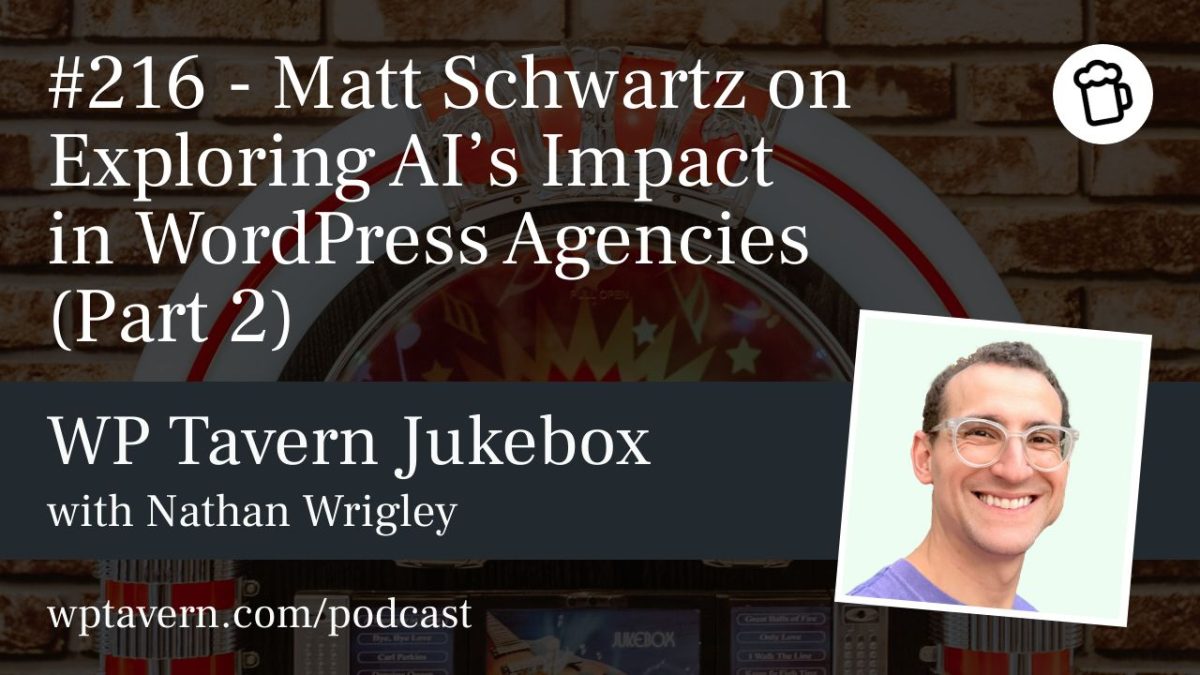
Artificial intelligence is transforming not only how WordPress agencies operate but also how they strategize for the future. On the latest episode of the WP Tavern Jukebox podcast, Matt Schwartz, an Atlanta-based WordPress agency owner and creator of the CheckView QA tool, shares detailed insights on integrating AI thoughtfully and securely into agency workflows. This is the second part of a two-episode series that builds on previous discussions about practical AI applications and the risks agencies must navigate.
Key Takeaways
- Agencies can enhance internal knowledge sharing by connecting AI chatbots to project management wikis, reducing AI hallucinations.
- Model Context Protocol (MCP) is emerging as a secure, efficient method for integrating AI with multiple internal systems.
- AI offers substantial benefits for QA and checklist automation, freeing human resources for higher-value tasks.
- Risks of AI adoption include data security concerns, overreliance on vendors, and managing AI errors.
- AI’s rise could disrupt the WordPress plugin ecosystem, potentially impacting community collaboration and plugin quality.
Giving AI Access to Your Agency’s Brain
One of the most transformative strategies Matt Schwartz discusses is allowing AI tools to access an agency’s internal knowledge base—essentially, its collective brain. This involves integrating AI-powered chatbots with project management wikis or documentation systems. In practice, this approach can drastically improve how teams share knowledge and solve problems without repeatedly reinventing solutions.
However, Matt cautions that this needs to be done carefully to avoid the common pitfall known as AI hallucinations, where the AI fabricates plausible but incorrect information. By ensuring the AI has real-time access to vetted, agency-specific data, hallucinations can be minimized, creating a more reliable AI assistant that supports decision-making and troubleshooting.
Model Context Protocol: A Game Changer for AI Integration
The podcast highlights the rising importance of Model Context Protocol (MCP), a relatively new approach to securely connect AI agents to multiple internal systems without the complexity and risk of traditional API integrations. MCP allows agencies to build AI workflows that pull relevant information from various sources while maintaining strict control over data access.
For most WordPress agencies, this means the ability to automate complex tasks without exposing sensitive information or relying on brittle, custom-coded API connections. MCP’s growing adoption suggests it will become a foundational technology for agencies aiming to leverage AI at scale.
Building Internal Tools with AI: Risks and Rewards
Matt stresses that AI-driven internal tools can generate significant efficiencies, especially in areas like quality assurance and checklist automation. By automating repetitive QA tasks, agencies free up human reviewers to focus on nuanced, higher-value assessments that AI cannot reliably perform yet.
Nevertheless, he warns agencies to be wary when deploying AI tools on public-facing or mission-critical systems. The risk of AI errors or security vulnerabilities is much higher in these contexts, and agencies should implement thorough testing and fallback mechanisms.
AI’s Impact on the WordPress Plugin Ecosystem
The conversation also explores how AI is reshaping the WordPress plugin market. Matt notes that AI-generated code and disposable plugins may flood the ecosystem, which could dilute quality and complicate plugin selection for site owners. This trend poses both challenges and opportunities for plugin developers and agencies who build or rely on plugins.
There is concern that the collaborative spirit that has long defined the WordPress community might erode if AI-generated tools proliferate without thoughtful stewardship. Agencies and developers must balance innovation with maintaining community standards and security.
Approaching AI Adoption with Eyes Wide Open
A key theme throughout the episode is caution. Matt urges agencies to approach AI adoption methodically, understanding the risks involved. Data security is paramount, especially when integrating AI with internal systems. Overdependence on AI vendors can create brittle workflows vulnerable to service changes or outages. And, crucially, AI is still prone to mistakes that require human oversight.
By adopting AI thoughtfully, agencies can position themselves to thrive amid industry changes. Matt suggests evolving hiring practices to include AI literacy and focusing on creating productized services that leverage AI’s strengths while mitigating its weaknesses.
What This Means for WordPress Users
For WordPress agency owners and freelancers, Matt Schwartz’s insights provide a roadmap for smart AI integration. The recommendation is clear: don’t rush into AI adoption blindly. Instead, invest in building AI tools that augment your agency’s internal knowledge and workflows, strengthening rather than replacing human expertise.
Understanding new technologies like Model Context Protocol gives agencies a competitive edge by enabling secure, scalable AI integration. This reduces risk and operational complexity compared to traditional API-heavy approaches. Agencies should also prioritize automating low-risk, repetitive tasks such as QA checklists, freeing their teams to focus on creativity and problem-solving.
At the same time, WordPress professionals should be vigilant about the broader ecosystem effects. The influx of AI-generated plugins and tools demands more rigorous evaluation and curation to maintain quality and security. Agencies and developers must collaborate to uphold the community’s values and avoid fragmenting the ecosystem.
In real-world deployments, the balance between innovation and caution will define which agencies succeed. Those that learn to combine AI with human judgment, secure data practices, and thoughtful strategy will shape the future of WordPress agencies in an AI-driven world.
Frequently Asked Questions
What is Model Context Protocol (MCP) and why does it matter for WordPress agencies?
MCP is a method for securely connecting AI agents to multiple internal systems without complex API setups. For WordPress agencies, it enables safer, more scalable AI integration that reduces development overhead and data exposure risks.
How can AI improve quality assurance in WordPress agencies?
AI can automate repetitive QA tasks like checklist execution and form testing, which frees human reviewers to focus on deeper analysis. This increases efficiency and reduces human error in routine checks.
What are the main risks when adopting AI in WordPress agency workflows?
Key risks include data security vulnerabilities, overreliance on third-party AI vendors, AI-generated misinformation (hallucinations), and unhandled AI errors. Agencies must implement safeguards and human oversight to mitigate these risks.
How might AI affect the WordPress plugin marketplace?
AI could lead to an influx of quickly generated, low-quality plugins, potentially cluttering the marketplace and undermining trust. This challenges developers and agencies to maintain quality standards and protect the community’s collaborative ethos.