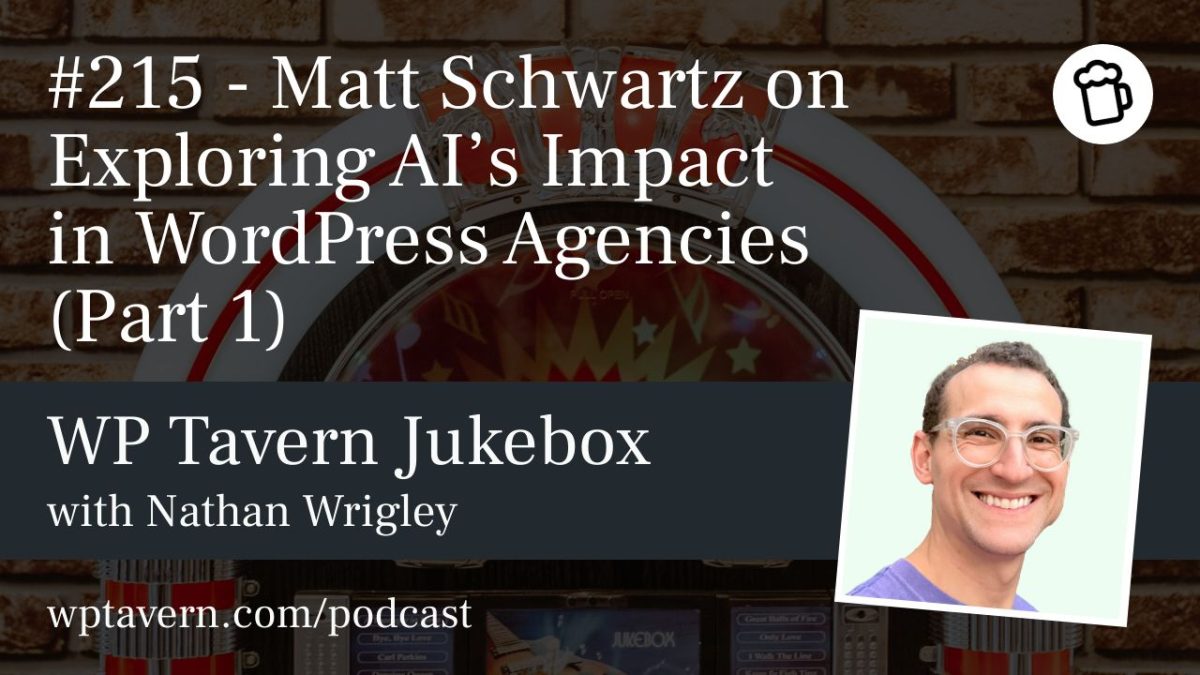
Artificial intelligence is reshaping many industries, but for WordPress agencies, its impact often unfolds behind the scenes. In the latest episode of WP Tavern’s Jukebox Podcast, Matt Schwartz, founder of Inspry, offers a nuanced take on how AI is changing agency workflows, rather than just website creation. This conversation sheds light on the practical applications of AI in agency operations, client relations, and service delivery.
Key Takeaways
- Matt Schwartz shares how AI is influencing WordPress agency processes beyond website building.
- AI can streamline standard operating procedures, client communication, debugging, and support.
- An AI vision document helps agencies intentionally integrate AI while managing risks.
- Human oversight remains critical to ethical and effective AI use in agency settings.
- This is the first part of a two-part series exploring AI’s role in WordPress agencies.
Matt Schwartz’s Journey Into WordPress Agencies
Matt Schwartz, who runs Inspry, an Atlanta-based WordPress and WooCommerce agency, started his journey into web design somewhat serendipitously. His early fascination with building websites as a teenager grew into a professional career, culminating in founding Inspry in 2011. Over the years, he has witnessed firsthand how agencies constantly iterate on workflows and processes to stay competitive.
His experience extends beyond agency management to product development, with CheckView—a WordPress testing tool designed to improve site reliability. This dual perspective gives Matt a deep understanding of the challenges agencies face and how technology can alleviate them.
The Shift: AI’s Role Beyond Website Creation
While much public discourse about AI in WordPress focuses on content generation or automated site building, Matt emphasizes a different lens. For most WordPress agencies, AI’s immediate value lies in enhancing internal operations rather than replacing creative work.
In practice, agencies spend significant time on repetitive tasks like client communications, meeting preparation, debugging code, and writing proposals. Matt highlights how AI-powered tools can automate or assist with these tasks, reducing stress and freeing human teams to focus on strategic and creative work.
For example, AI can summarize meeting notes, draft initial proposal outlines, or analyze error logs to suggest fixes. These applications often happen “behind the scenes,” invisible to clients but transformative for agency efficiency.
Creating Guardrails With an AI Vision Document
Matt stresses the importance of intention when integrating AI into agency workflows. He introduces the concept of an AI vision document—a strategic guide that defines where and how AI should be used within the business. This document sets guardrails to avoid overreliance on AI or ethical missteps.
The vision document helps agencies align AI use with core values, client expectations, and regulatory considerations. It also clarifies when human intervention is necessary to maintain quality and responsibility.
Risks and Ethical Considerations
Despite AI’s promise, Matt candidly discusses pitfalls that agencies must navigate. Overhyping AI capabilities can lead to unrealistic client expectations and internal frustration. Additionally, ethical concerns arise around data privacy, transparency, and the potential loss of human touch in client interactions.
Maintaining a human in the loop is crucial, particularly for critical decisions and client-facing moments. Agencies must balance AI efficiency with accountability and trustworthiness.
Real-World Examples of AI in Agency Workflows
Matt shares concrete examples where AI has already saved time and stress for his agency and others. These include automated debugging assistance, client support chatbots that escalate complex issues, and AI-generated drafts for proposals and reports. Such applications extend service offerings and improve client satisfaction.
His approach dispels the notion that AI is only about flashy, surface-level automation. Instead, it highlights AI’s role as an augmentation tool that supports agency professionals.
What This Means for WordPress Users
We see from Matt’s insights that AI’s impact on WordPress agencies is subtle but meaningful. For agency owners and freelancers, this means evaluating which internal workflows can benefit most from AI assistance and adopting tools with clear guidelines and human oversight.
Developers and agency operators should consider drafting an AI vision document to strategically integrate AI, ensuring that ethics and client trust remain front and center. This approach helps avoid the fatigue many experience from AI hype and positions agencies to leverage AI’s strengths effectively.
The conversation also signals a broader trend in the WordPress ecosystem where AI is becoming a background enabler rather than a front-facing disruptor. Agencies that embrace this mindset can differentiate themselves by delivering more consistent, efficient, and value-driven services.
For more WordPress agency professionals, this episode is a call to explore AI thoughtfully and practically, focusing on enhancing human workflows instead of replacing them.
Frequently Asked Questions
How can AI improve client communication in WordPress agencies?
AI can automate routine communications such as meeting summaries, follow-up emails, or initial proposal drafts. This reduces manual workload and ensures consistency, allowing agencies to focus on personalized client interactions where it matters most.
What is an AI vision document and why is it important?
An AI vision document outlines how an agency plans to integrate AI into its operations. It sets guidelines and ethical boundaries to ensure AI is used intentionally and responsibly, helping avoid misuse and maintain client trust.
Are there risks to using AI in agency workflows?
Yes, risks include overdependence on AI, potential privacy issues, and loss of human nuance in client interactions. Agencies should keep humans involved in key decisions and be transparent about AI’s role.
How is AI used in debugging and support for WordPress agencies?
AI tools can analyze error logs, suggest fixes, and handle first-level support inquiries. They help speed up troubleshooting and free human staff to focus on complex or sensitive issues.